
Why a Teddy Bear With Vitiligo Matters This November


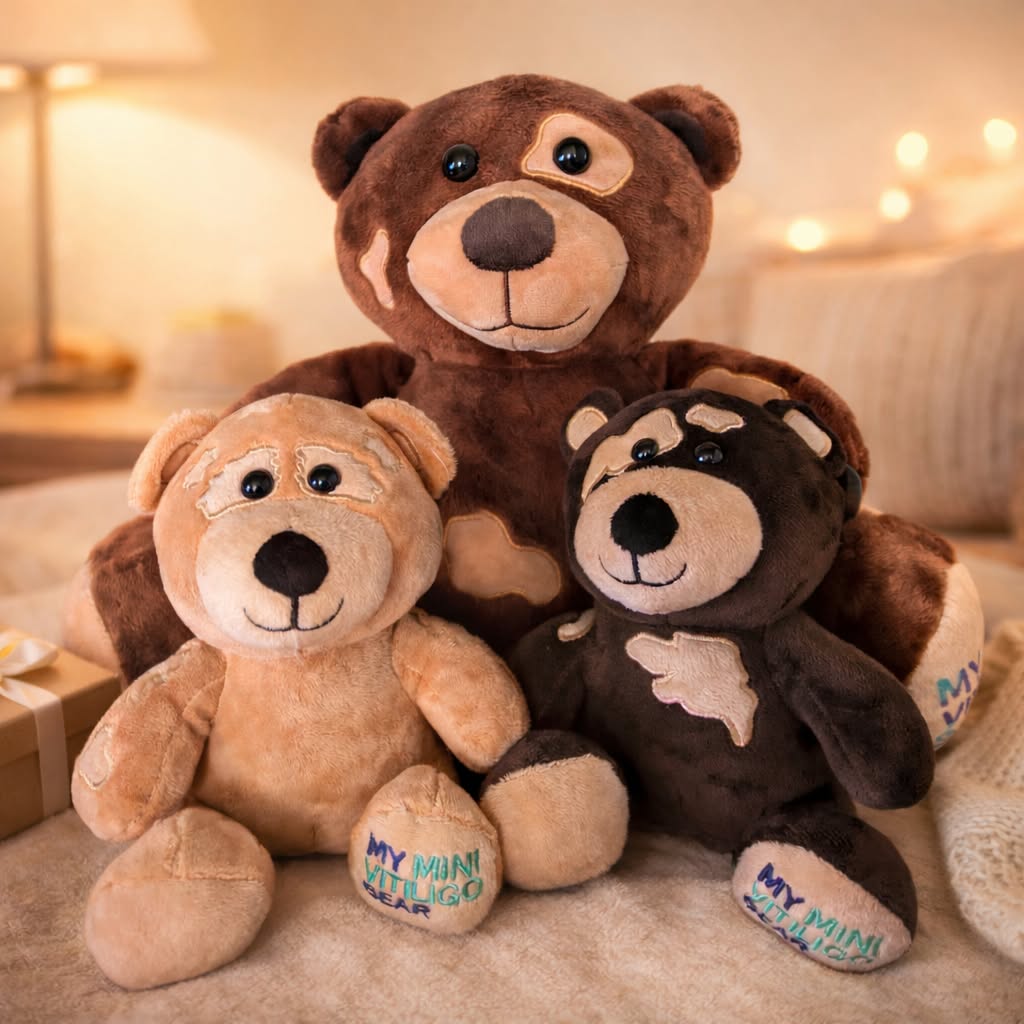
Picture a five-year-old digging through a basket of stuffed animals and stopping at one with white patches around its eyes and on its paws, the same patches she has on her own hands. For a lot of kids with vitiligo, that kind of moment is rare. The faces in their picture books, cartoons, and toy aisles almost never look like theirs.
That’s the idea behind NovemBear, a month-long fundraiser from the Vitiligo Society, a UK charity that supports people living with vitiligo. Throughout November, the Vitiligo Society is raising £2,000 for its work with children, young people, and their families, and many donors can choose a Vitiligo Bear as a thank-you.
This is the Vitiligo Society’s first NovemBear, and for the first time, the bears can ship anywhere in the world, but only during November. Here’s where the bear came from, why it matters, and how NovemBear works.
In this article
- Where the Vitiligo Bear came from
- Why it matters when vitiligo starts in childhood
- What the Vitiligo Society does for kids and families
- How NovemBear works
- The takeaway
Where the Vitiligo Bear came from
The bear started with a request from parents. Families told the Vitiligo Society they wanted a teddy that looked like their children, so the Vitiligo Society made one, patches and all.
Since 2022, the Vitiligo Society has been giving Vitiligo Bears to the children and young people it supports. Nearly every child who comes to one of its events goes home with one, and so does any child whose parent reaches out because they’re struggling. The Vitiligo Society hasn’t kept an exact count, but according to their team, they’ve given away ‘a lot of bears.’
NovemBear is the first time the Vitiligo Society has turned that giving into a campaign, and it hopes to make it an annual tradition.
It’s a simple object doing a specific job. It’s an everyday reminder that skin like his or hers exists in the world outside of the mirror. The message is clear: you aren’t alone.
Abbie Hurrell, CEO of the Vitiligo Society, puts it this way: “For a child with vitiligo, seeing someone who looks like them can change everything. A bear with patches just like theirs might sound small, but it tells them they’re not the only one, and that their skin is something to be proud of. NovemBear is about making sure every child with vitiligo feels seen.”
Why it matters when vitiligo starts in childhood
For many of us, vitiligo showed up early. Roughly half of people with vitiligo see their first patches before age 20, and about a third before age 12 (Ezzedine et al., 2015). That means a lot of the hardest moments arrive before a child has the language to handle them: a classmate pointing at her hands during art class, a stranger staring at the pool, a question from a family member she doesn’t know how to answer.
The Vitiligo Society’s own numbers show how long that weight can last. In its Let’s Talk Vitiligo survey of more than 700 people living with vitiligo, nearly two in three said vitiligo has harmed their mental health. Close to half (46%) said it leaves them feeling isolated or depressed, and 38% said they struggle with being stared at or judged. Only 15% said they felt informed when they were diagnosed. These figures describe people with vitiligo in general, not children specifically, but the Vitiligo Society points out that many of the people behind them first faced these moments as kids.
Parents carry their own version of this: becoming an overnight expert, learning the vocabulary, rehearsing what to say to teachers, and holding their own worry while trying to stay steady for their child. Knowing there are organizations and communities paying attention to kids with vitiligo, and to the families raising them, can make the early years feel a little less solitary.
What the Vitiligo Society does for kids and families
The Vitiligo Society has supported people living with vitiligo in the UK since 1985. It describes itself as a small charity, and its work spans five areas: education, research, support services, advocacy, and outreach (The Vitiligo Society).
NovemBear donations go toward the Vitiligo Society’s work with children, young people, and families. That includes:
- Casework. One-to-one support for families of children with vitiligo, often starting the moment they first hear the diagnosis.
- Family Days. Gatherings that bring families together, so kids with vitiligo can meet other kids who look like them.
- A free Schools Resource Pack. Materials that help teachers support a child with vitiligo in the classroom.
- The helpline and Vitiligo Bears. Support by phone, and bears for the children who need one.
The Vitiligo Society also runs free online support sessions, including the Vitiligo Parent Support Network for parents and carers of children with vitiligo, and VitSupport groups for anyone affected by vitiligo.
How NovemBear works
NovemBear runs from Sunday, November 1, through midnight on Monday, November 30 (UK time). Donations go through Crowdfunder, in British pounds, toward a £2,000 goal. You can give any amount, or choose a thank-you.
After so many requests from people outside the UK, the Vitiligo Society added international rewards this year, with tracked postage to anywhere in the world included:
- Sponsor a Bear (£15, from anywhere): helps the Vitiligo Society give bears to the children it supports
- Mini Bear, tan or brown: £20 in the UK, £40 internationally
- Big Bear, the original: £30 in the UK, £55 internationally
- Bear Collector, all three bears: £65 in the UK, £100 internationally
UK bears are shipped by December 11, in time for the holidays. The bears are only available during November. Once the campaign closes, they go back into hiding until next year.
Every donation, whether or not you choose a thank-you, supports the Vitiligo Society’s work with children, young people, and families.
There are a few ways to join in without donating, too:
- Share your bear. If you already have a Vitiligo Bear, post a photo with #NovemBear. With your permission, the Vitiligo Society will add it to its Bear Wall.
- Play Spot the Bear. Twice a week through November, the Vitiligo Society is hiding a bear in its photos for followers to find.
- Pass it on. Sending the campaign to one friend or family member, especially another parent, helps it reach more families.
The takeaway
NovemBear is the Vitiligo Society’s first November fundraiser, raising £2,000 for its work with children, young people, and families living with vitiligo. For the first time, Vitiligo Bears can ship anywhere in the world, but only until the campaign closes on November 30. A teddy with patches is a small thing. For a kid who rarely sees her skin anywhere but the mirror, small things can stay with her a long time.
NovemBear runs through November 30. Visit NovemBear on Crowdfunder to sponsor a bear or choose your thank-you.
Raising a child with vitiligo, or remembering what it was like to be one? Try these…
- What Not to Say to Someone With Vitiligo
- Here’s the Advice Our Community Would Give Someone Newly Diagnosed with Vitiligo
- Our Favorite Vitiligo Books for Children
Sources
- The Vitiligo Society. Introducing NovemBear: helping children and young people with vitiligo feel seen. Vitlife, October 20, 2026.
- Ezzedine K, Eleftheriadou V, Whitton M, van Geel N. Vitiligo. The Lancet, 2015;386(9988):74–84.
- The Vitiligo Society. Supporting Children with Vitiligo. Crowdfunder, funded June 16, 2021.
- The Vitiligo Society. Organizer profile and events. Eventbrite.
- The Vitiligo Society. Vitiligo Parent Support Network Virtual Support Session. Eventbrite.
- The Vitiligo Society. NovemBear. Crowdfunder, November 2026.
- The Vitiligo Society. Campaign details and quote from Abbie Hurrell, provided to Living Dappled, November 2026.


